Peak15Adventure

Thapa Peak (6,012m)

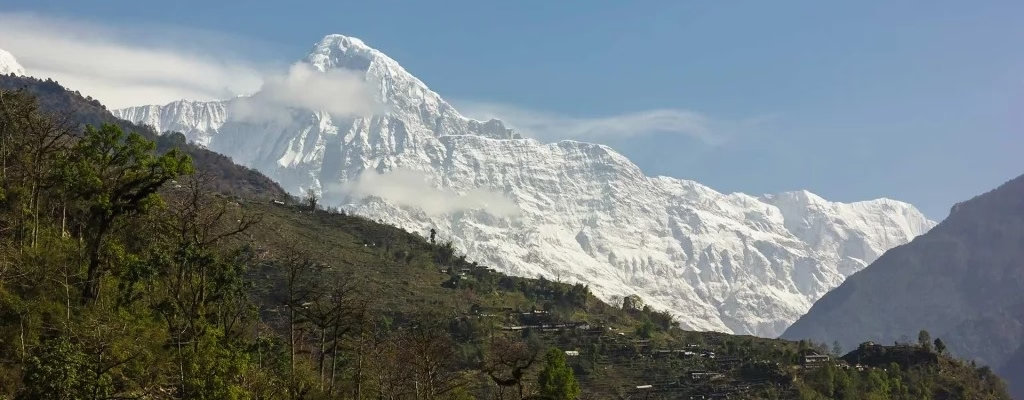
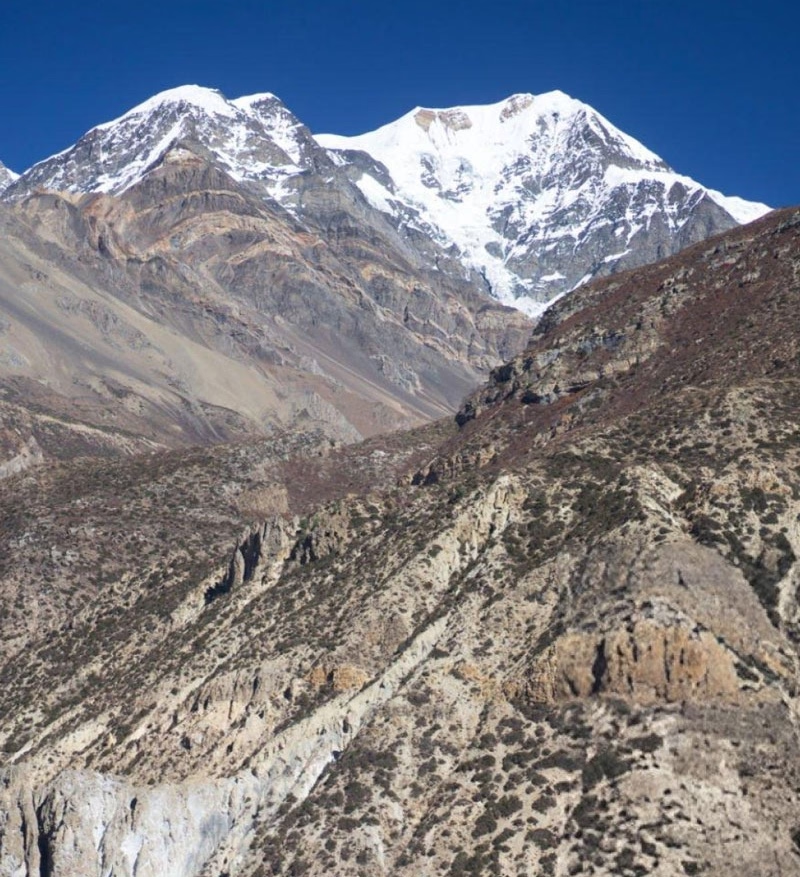
Thapa Peak (6,012m), also known as Dhampus Peak, is a demanding Himalayan climbing adventure that combines high-altitude trekking with a genuine mountaineering challenge in the spectacular Dhaulagiri region of Nepal. The journey leads through remote mountain landscapes, dramatic glacial terrain, high passes, and the secluded wilderness surrounding the Dhaulagiri massif before reaching the mountain’s climbing section. With careful acclimatization, progressive altitude gain, and dedicated preparation for the summit, the expedition is designed for climbers seeking more than a conventional trekking experience. Peak 15 Adventure combines experienced mountain leadership, thoughtful expedition planning, and strong logistical support to turn the ascent of Thapa Peak into a purposeful Himalayan achievement.

Duration
20 days
Max Altitude
6012 m
Destination
Nepal
Activity
Peak Climbing
Accommodation
Hotel
Group Size
2-10
Transport
Private Vehicle & Flight
Meals
B-L-D
Season
April-May & Sep-Oct
Difficulty
Moderate

Why travellers love it

  • Climb Thapa Peak at 6,012m - a demanding Himalayan summit that combines technical climbing with a rewarding high-altitude expedition experience.

  • Explore the remote Dhaulagiri region, surrounded by dramatic Himalayan wilderness, towering peaks, glaciers, and rugged mountain terrain.

  • Cross spectacular high-altitude passes, including the challenging French Pass and the remote landscapes leading toward Hidden Valley.

  • Experience Hidden Valley, one of the most isolated and atmospheric sections of the Dhaulagiri trekking route, far from the busy trails of Nepal's popular trekking regions.

  • Progressive acclimatization and climbing preparation, allowing the expedition to build altitude and technical confidence step by step before the summit attempt.

  • Witness an extraordinary Himalayan panorama, with expansive views toward Dhaulagiri and surrounding snow-covered peaks from the high mountain terrain.

  • Combine wilderness trekking with true mountaineering, moving beyond conventional trekking into glacier travel, rope work, snow and ice terrain, and summit climbing.

  • Expert expedition support from Peak 15 Adventure, with experienced mountain leadership, carefully planned logistics, acclimatization strategy, and summit-focused

Trip overview

Thapa Peak (6,012m), also known as Dhampus Peak, rises within the spectacular Dhaulagiri region of western Nepal, offering a true high-altitude expedition for climbers who want to move beyond conventional trekking. The mountain stands amid an extraordinary landscape of towering Himalayan summits, glacial valleys, rugged passes, and remote wilderness, making the journey as important as the summit itself. Rather than following a straightforward approach, the expedition gradually draws climbers deeper into one of Nepal’s most dramatic mountain environments.

The adventure begins in Kathmandu with expedition preparation, equipment checks, and a detailed briefing before heading toward the Dhaulagiri region. As the trail progresses, the character of the journey changes-from green valleys and traditional mountain settlements to increasingly rugged terrain, glaciers, moraines, and high-altitude passes. The route through the Dhaulagiri wilderness, including the spectacular French Pass and Hidden Valley, adds an element of exploration that distinguishes Thapa Peak from many other 6,000m climbing adventures in Nepal.

The ascent demands more than physical endurance. Climbers need to be comfortable with prolonged trekking at altitude and prepared for changing mountain conditions, steep terrain, snow and ice, and the demands of a summit push above 6,000m. The expedition therefore incorporates gradual acclimatization and appropriate preparation before entering the climbing phase. At higher elevations, the landscape becomes increasingly austere and powerful, with the Dhaulagiri massif and surrounding peaks creating an imposing backdrop to the climb.

The final ascent of Thapa Peak is where trekking becomes mountaineering. Depending on conditions and route strategy, climbers may encounter snow-covered slopes, glaciated terrain, and sections requiring rope techniques and appropriate climbing equipment. Reaching 6,012m is not simply about gaining elevation; it represents the culmination of days of adaptation, disciplined preparation, teamwork, and decision-making in a demanding Himalayan environment.

With Peak 15 Adventure, the Thapa Peak Expedition is planned around responsible acclimatization, experienced mountain leadership, reliable logistics, and careful attention to the realities of high-altitude climbing. Our approach is to give climbers the structure and support they need while allowing the mountain to remain what it should be—a genuine expedition, where every stage builds toward the moment you stand on the summit and look across the vast Dhaulagiri landscape.


Itinerary

  • Day 01

    Arrival in Kathmandu (1,400m)

    Your Thapa Peak expedition begins with your arrival in Kathmandu, Nepal’s vibrant mountain gateway. After being welcomed at the airport, our team will transfer you to the hotel where you can settle in, recover from your journey, and take your first breath of the Himalayan atmosphere. Although there is no trekking or climbing today, this first day is an important part of the expedition, allowing you to become comfortable with the environment before the journey moves toward the remote Dhaulagiri region.

    Later, you will meet the Peak 15 Adventure expedition team for an introductory briefing. We will walk you through the upcoming itinerary, discuss the route and altitude progression, review essential safety considerations, and check your climbing equipment to ensure everything is ready for the days ahead. Any final gear requirements can also be addressed at this stage. The evening provides an opportunity to enjoy a welcome dinner, meet your fellow expedition members, and rest before the adventure properly begins.

    • MealsB/L/D
    • AccommodationTeahouse
    • Travel Duration30-45 min
    • RouteKathmandu to Kathmandu
    • TransportationPrivate Vehicle
    • Elevation1,400m to 1,400m
  • Day 02

    Rest, Briefing & Expedition Preparation in Kathmandu

    The Thapa Peak (6,012m) Expedition is dedicated to preparation, planning, and building the foundation for a successful Himalayan climbing experience. After your arrival in Kathmandu, this day provides an opportunity to rest, recover from your journey, and become familiar with the expedition schedule before heading into the remote Dhaulagiri region. While the mountains may still be beyond the city, your expedition begins taking shape through careful preparation and a clear understanding of the challenges ahead.

    The Peak 15 Adventure team will organize a comprehensive pre-expedition briefing covering the route, altitude progression, trekking conditions, climbing phases, safety procedures, and logistical arrangements. Our expedition specialists will also inspect your personal climbing equipment to ensure that essential gear is suitable for the journey. Any missing or inappropriate equipment can be identified early, allowing time for final adjustments or arrangements in Kathmandu.

    The remainder of the day is reserved for rest, personal preparation, and final arrangements. You may use this time to explore the surrounding area, organize your belongings, or simply recover before the demanding days of trekking and mountaineering begin. The focus is not on rushing into the adventure, but on approaching it with confidence, awareness, and readiness.

    At Peak 15 Adventure, we believe that every successful summit begins long before the first climbing step. Thoughtful preparation, experienced guidance, and responsible expedition planning create the foundation for your journey toward the summit of Thapa Peak.

    • MealsB/L/D
    • AccommodationHotel
    • Travel DurationFull day
    • RouteKathmandu
    • Elevation1400m
  • Day 03

    Fly from Kathmandu to Pokhara (960m)

    Your Thapa Peak (6,012m) Expedition continues with a scenic flight from Kathmandu to Pokhara, a beautiful lakeside city nestled beneath the Annapurna and surrounding Himalayan ranges. As you leave the capital behind, the journey shifts toward the western mountains, bringing you closer to the rugged landscapes that define the Dhaulagiri region. The short flight offers a glimpse of Nepal's diverse geography, from densely settled valleys to the dramatic mountain horizons that await beyond Pokhara.

    Upon arrival, the Peak 15 Adventure team will arrange your transfer to the hotel, where you can settle in and enjoy a relaxed transition into the next phase of the expedition. Depending on the travel schedule, you may have time to explore Pokhara's peaceful surroundings, enjoy views of the surrounding mountains, or take a well-deserved break before the overland journey begins.

    The day also provides an opportunity to review your personal belongings, organize your trekking equipment, and prepare for the road transfer toward the Dhaulagiri region. As the expedition moves away from the more accessible city environment, proper organization and readiness become increasingly important.

    At Peak 15 Adventure, we see this transition as more than a change of destination. It is the beginning of your movement from the familiar into the remote, where each passing mile brings you closer to the high-altitude challenge of Thapa Peak.

    • MealsB/L/D
    • AccommodationHotel
    • Travel Duration25-30 min
    • RouteKathmandu to Pokhara
    • TransportationFlight
    • Elevation1,400m to 960m
  • Day 04

    Drive from Pokhara to Takam

    Leaving Pokhara behind, the Thapa Peak (6,012m) Expedition heads west toward the remote mountain landscapes of the Dhaulagiri region. The drive to Takam marks an important transition from the comfortable lakeside environment into the rugged valleys that form the gateway to the expedition's trekking route. As the road gradually climbs through rural settlements, terraced hillsides, forests, and winding mountain terrain, the landscape begins to feel increasingly remote and distinctly Himalayan.

    The journey follows mountain roads toward the Myagdi region, offering glimpses of traditional villages and dramatic hillsides along the way. Although much of the day is spent travelling by vehicle, the changing landscape provides an introduction to the terrain that will soon be explored on foot. With the Dhaulagiri wilderness ahead, Takam serves as an important staging point before the expedition transitions fully into trekking.

    After reaching Takam, the team will settle into the lodge or teahouse and prepare for the first substantial trekking stages. This is a good opportunity to organize your daypack, check essential equipment, and rest after the long drive. The expedition leader will also provide any necessary updates regarding the following day's route and conditions.

    With the road journey behind you, the character of the expedition begins to change. From Takam onward, the journey becomes increasingly intimate with the mountains-less about covering distance quickly and more about moving steadily into the wilderness toward Thapa Peak.

    • MealsB/L/D
    • AccommodationHotel
    • Travel Duration7-9 hours
    • RoutePokhara to Takam
    • TransportationTrekking
    • Elevation960m to 1,670m
  • Day 05

    Trek from Takam to Bagar (2,080m)

    Leaving Pokhara behind, the Thapa Peak (6,012m) Expedition heads west toward the remote mountain landscapes of the Dhaulagiri region. The drive to Takam marks an important transition from the comfortable lakeside environment into the rugged valleys that form the gateway to the expedition's trekking route. As the road gradually climbs through rural settlements, terraced hillsides, forests, and winding mountain terrain, the landscape begins to feel increasingly remote and distinctly Himalayan.

    The journey follows mountain roads toward the Myagdi region, offering glimpses of traditional villages and dramatic hillsides along the way. Although much of the day is spent travelling by vehicle, the changing landscape provides an introduction to the terrain that will soon be explored on foot. With the Dhaulagiri wilderness ahead, Takam serves as an important staging point before the expedition transitions fully into trekking.

    After reaching Takam, the team will settle into the lodge or teahouse and prepare for the first substantial trekking stages. This is a good opportunity to organize your daypack, check essential equipment, and rest after the long drive. The expedition leader will also provide any necessary updates regarding the following day's route and conditions.

    With the road journey behind you, the character of the expedition begins to change. From Takam onward, the journey becomes increasingly intimate with the mountains—less about covering distance quickly and more about moving steadily into the wilderness toward Thapa Peak.

    • MealsB/L/D
    • AccommodationTented Camp
    • Travel Duration5-6 hours
    • RouteTakam to Bagar
    • TransportationTrekking
    • Elevation1,670m to 2,080m
  • Day 06

    Trek from Bagar to Dovan (2,520m)

    The trail continues deeper into the remote Dhaulagiri landscape as you trek from Bagar to Dovan, following a rugged mountain route through increasingly secluded surroundings. The day brings a steady gain in elevation, with the trail winding through dense forest, crossing streams, and navigating uneven sections of terrain. The surroundings become quieter and wilder as settlements become less frequent, reinforcing the sense that the expedition is moving into a truly remote Himalayan environment.

    As the route progresses, the character of the landscape begins to change. Forested slopes, rocky sections, and steep-sided valleys gradually replace the more cultivated scenery of the lower approach. The sound of flowing water accompanies sections of the trail, while glimpses through the trees reveal the dramatic scale of the surrounding mountains. Maintaining a steady pace is important today, as the objective is to gain altitude gradually while preserving energy for the higher stages of the expedition.

    Arriving at Dovan (2,520m), the team settles into camp and takes time to recover from the day's trek. Your expedition leader will continue monitoring the team's condition and provide guidance on hydration, nutrition, and pacing as the altitude increases. The evening is also an opportunity to prepare equipment and clothing for the increasingly alpine environment ahead.

    Dovan is more than another overnight stop—it represents another step away from the inhabited valleys and toward the high mountain wilderness. With every kilometre, Thapa Peak becomes closer, while the surrounding Dhaulagiri landscape becomes increasingly powerful and remote.

    • MealsB/L/D
    • AccommodationTented Camp
    • Travel Duration5-6 hours
    • RouteBagar to Dovan
    • TransportationTrekking
    • Elevation2,080m to 2,520m
  • Day 07

    Trek from Dovan to Italian Base Camp (3,660m)

    Today, the expedition moves into a distinctly higher mountain environment as you leave Dovan and trek toward Italian Base Camp at approximately 3,660m. The trail continues through the remote Dhaulagiri valley, gradually leaving the denser forests behind as the landscape becomes more open, rugged, and alpine. With a significant gain in elevation, this is an important day for maintaining a controlled pace and allowing your body to adapt naturally to the increasing altitude.

    The route follows the valley through a mixture of forested sections, rocky terrain, and steep mountain slopes. As you progress, the surrounding peaks become increasingly prominent, creating a dramatic introduction to the immense Himalayan landscape ahead. The transition from woodland to alpine terrain is particularly noticeable, and the feeling of remoteness grows as the trail moves farther away from permanent settlements.

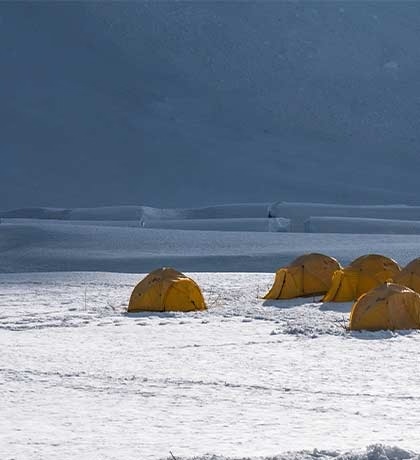
    Reaching Italian Base Camp marks a significant milestone in the approach to Thapa Peak. The camp provides an important acclimatization point before the expedition enters the much higher and more demanding terrain beyond. After settling into camp, the team can rest, hydrate, and enjoy the surrounding mountain scenery while the expedition leader assesses everyone's condition and prepares the group for the next stage.

    The elevation gained today is substantial, so the emphasis remains on steady movement rather than speed. Proper hydration, nutrition, rest, and communication with the expedition team become increasingly important from this point onward.

    As evening settles over the Dhaulagiri landscape, the expedition takes on a more serious alpine character. Italian Base Camp is where the journey begins to feel less like a remote trek and increasingly like a true Himalayan expedition toward 6,012m.

    • MealsB/L/D
    • AccommodationTented Camp
    • Travel Duration6-7 hours
    • RouteDovan to Italian Base Camp
    • TransportationTrekking
    • Elevation2,520m to 3,660m
  • Day 08

    Acclimatization at Italian Base Camp (3,660m)

    Today is dedicated to acclimatization at Italian Base Camp, an important pause before the expedition moves toward the significantly higher terrain of the Dhaulagiri region. Rather than covering another long distance, the focus is on allowing your body to adapt to the increased elevation while giving the expedition team time to assess everyone's condition. A gradual approach to altitude is essential for maintaining strength and readiness for the demanding stages ahead.

    Depending on weather, terrain, and the team's condition, the expedition leader may organize a short acclimatization hike around the surrounding area. The purpose is not to gain significant distance but to encourage gentle movement and controlled exposure to altitude before returning to camp. The spectacular mountain surroundings provide an impressive setting, with rugged slopes, glaciers, and towering Himalayan peaks creating a clear sense of the wilderness ahead.

    The remainder of the day is reserved for rest, hydration, nutrition, and expedition preparation. Your climbing equipment can be reviewed once again, while clothing and personal gear can be organized for the colder and higher sections of the route. The team will also discuss the upcoming journey toward Dhaulagiri Base Camp and the conditions that may be encountered farther into the expedition.

    At this altitude, listening to your body becomes increasingly important. Any symptoms of altitude-related illness should be communicated immediately to the expedition leader so that appropriate decisions can be made. A rest day is not a lost day on a high-altitude expedition—it is part of the strategy that helps prepare you for the mountain ahead.

    With the Dhaulagiri wilderness stretching beyond the camp, Italian Base Camp offers a valuable moment to pause, adapt, and look toward the higher ground. The summit is still distant, but today strengthens the foundation for every step that will eventually lead toward 6,012m.

    • MealsB/L/D
    • AccommodationTented Camp
    • Travel DurationFull day
    • RouteItalian Base Camp to Italian Base Camp
    • Transportationacclimatization, rest, and light activity
    • Elevation3,660m to 3,660m
  • Day 09

    Trek from Italian Base Camp to Dhaulagiri Base Camp (Approx. 4,750m)

    Today marks a major transition into the high-altitude heart of the Dhaulagiri region as the expedition leaves Italian Base Camp and continues toward Dhaulagiri Base Camp. The trail gradually enters a more austere alpine environment, with vegetation becoming increasingly sparse and the surrounding terrain dominated by rock, ice, glaciers, and towering Himalayan walls. The substantial elevation gain makes this a demanding day, so maintaining a slow, controlled rhythm is essential.

    The route follows the upper reaches of the valley toward the Dhaulagiri Glacier, with the landscape becoming progressively more dramatic. As you move higher, the immense faces of the surrounding peaks begin to dominate the horizon, creating a powerful sense of scale and isolation. Sections of the route may involve uneven moraine terrain and rocky glacial approaches, requiring careful footing and close attention to the guidance of the expedition team.

    Reaching Dhaulagiri Base Camp at approximately 4,750m is a significant milestone. From here, the expedition is firmly in high-altitude territory, and the effects of elevation become more noticeable. After settling into camp, the priority is recovery, hydration, nutrition, and allowing the body to adapt. The climbing team will also assess everyone's condition and review the upcoming route toward Thapa Peak.

    This is a day when patience matters. The objective is not simply to arrive at camp, but to arrive strong enough to continue higher. The expedition leader may adjust the following schedule according to weather, route conditions, and the team's acclimatization.

    As evening arrives beneath the towering Dhaulagiri massif, the scale of the expedition becomes unmistakable. The comfortable valleys are now far behind, and the journey toward the 6,012m summit has entered its most serious phase.

    • MealsB/L/D
    • AccommodationTented camp
    • Travel Duration6-7 hours
    • RouteItalian Base Camp to Dhaulagiri Base Camp
    • TransportationTrekking
    • Elevation3,660m to 4,750m
  • Day 10

    Rest & Acclimatization at Dhaulagiri Base Camp (4,750m)Day

    Today is an essential acclimatization and recovery day at Dhaulagiri Base Camp, giving your body time to adjust to the significant elevation before the expedition moves toward the higher terrain of Thapa Peak. After the demanding ascent from Italian Base Camp, a slower day allows the team to recover physically while the expedition leaders assess everyone's response to altitude.

    A short acclimatization hike may be arranged around the base camp, depending on weather, terrain, and the team's condition. The purpose is to remain active without unnecessary exertion, helping the body adapt while conserving energy for the more demanding stages ahead. From the base camp, the surrounding landscape reveals the immense scale of the Dhaulagiri massif, with glaciers, rocky ridges, and snow-covered peaks forming a dramatic alpine setting.

    The day also provides valuable time for equipment inspection and expedition preparation. Climbing gear can be checked, personal equipment reorganized, and clothing prepared for the colder conditions ahead. The expedition leader will discuss the upcoming route, expected terrain, weather considerations, and the strategy for reaching Thapa Peak Base Camp and eventually the summit.

    At approximately 4,750m, altitude awareness becomes increasingly important. Climbers are encouraged to stay hydrated, eat well, rest sufficiently, and communicate openly about any symptoms or discomfort. The expedition schedule can be adjusted when necessary because acclimatization is not a race—the priority is arriving at the climbing phase healthy, strong, and prepared.

    Surrounded by the vast Dhaulagiri wilderness, today's stillness provides a valuable contrast to the days of trekking. There is no summit to chase today; the objective is to prepare the climber who will chase it tomorrow.

    • MealsB/L/D
    • AccommodationTented Camp
    • Travel DurationFull day
    • RouteDhaulagiri Base Camp to Dhaulagiri Base Camp
    • Transportationclimatization, recovery, and expedition preparation
    • Elevation4,750m to 4,750m
  • Day 11

    Additional Rest at Dhaulagiri Base Camp (4,750m)

    A second day at Dhaulagiri Base Camp provides valuable time for the team to consolidate its acclimatization before moving toward the higher and more demanding terrain of the Thapa Peak climbing section. At approximately 4,750m, the body is already working harder to adapt to the reduced oxygen available at altitude, so another controlled day can help preserve energy and improve readiness for the stages ahead.

    The day begins at an unhurried pace, with rest, hydration, nutritious meals, and a careful assessment of each climber's condition. If conditions are suitable, the expedition leader may organize a short hike around the base camp to encourage gentle movement and further altitude exposure without creating unnecessary fatigue. The purpose is not to gain distance, but to remain active while allowing the body to continue adapting.

    This additional rest day is also an important opportunity for technical preparation. Climbing equipment, clothing layers, boots, crampons, harnesses, ice axe, helmet, and other essential gear can be checked and organized before the team moves toward higher ground. The climbing leader will review the upcoming route, discuss mountain conditions, and explain the approach to Thapa Peak Base Camp and the eventual summit attempt.

    The expedition team will also use this day to assess whether everyone is sufficiently acclimatized and prepared to proceed. Weather and route conditions will be considered alongside individual health and energy levels. If adjustments are required, the itinerary can be adapted accordingly—because in high-altitude mountaineering, flexibility is part of good expedition planning.

    Beyond the practical preparation, this quieter day offers a moment to absorb the extraordinary surroundings. With the immense Dhaulagiri massif rising around the camp, the reality of the climb ahead becomes increasingly tangible. Tomorrow, the expedition moves onward; today is about making sure you are ready to move higher.

    • MealsB/L/D
    • AccommodationTented camp
    • Travel DurationFull day
    • RouteDhaulagiri Base Camp to Dhaulagiri Base Camp
    • Transportationacclimatization, readiness assessment, and climbing preparation
    • Elevation4,750m to 4,750m
  • Day 12

    Trek from Dhaulagiri Base Camp to Thapa Peak Base Camp via Thapa Pass (5,150m)

    Today, the expedition enters a more remote and demanding phase as you leave Dhaulagiri Base Camp and make your way toward Thapa Peak Base Camp via the high-altitude Thapa Pass. The trail leads across rugged glacial and moraine terrain, where the landscape becomes increasingly stark, open, and alpine. With the altitude already above 4,700m, every step requires a controlled pace, careful footing, and close attention to hydration and physical condition.

    The approach toward Thapa Pass introduces steeper and more challenging terrain, with mountain conditions playing an important role in the day's progress. Depending on snow, ice, and route conditions, sections may require additional caution and appropriate mountaineering techniques under the guidance of the expedition team. After crossing the pass, the route continues toward the designated Thapa Peak Base Camp, where the climbing team establishes camp and prepares for the summit phase.

    Reaching approximately 5,150m is an important milestone. At this altitude, the focus shifts from simply trekking to being fully prepared for the technical climbing ahead. The evening is dedicated to recovery, hydration, equipment checks, route discussion, and reviewing weather and summit conditions with the climbing team.

    • MealsB/L/D
    • AccommodationTented Camp
    • Travel Duration6-8 hours
    • RouteDhaulagiri Base Camp to Thapa Peak Base Camp
    • TransportationTrekking
    • Elevation4,750m to 5,150m
  • Day 13

    Summit Thapa Peak (6,012m) & Return to Base Camp

    Today is the defining day of the Thapa Peak expedition as you make your summit attempt on Thapa Peak at 6,012m. The climb begins very early, taking advantage of the most stable conditions available while allowing sufficient time for the ascent and return. After final equipment checks, the team moves onto higher snow and mountain terrain, where crampons, harnesses, ropes, ice axe, and other technical equipment may be used according to current route conditions.

    The ascent demands patience, endurance, and precise movement. As the altitude increases, the air becomes thinner and the terrain more demanding, making an efficient pace essential. The climbing team will carefully assess weather, snow conditions, visibility, and individual physical condition throughout the ascent. Rather than rushing toward the summit, the priority remains safe and disciplined progress.

    Reaching the summit of Thapa Peak (6,012m) is the culmination of the expedition’s preparation, acclimatization, and climbing effort. From the summit, the surrounding Himalayan landscape opens into an extraordinary high-altitude panorama, offering a powerful perspective across the Dhaulagiri region. After a brief summit celebration and photographs, the team begins the descent with the same level of caution and concentration required during the ascent.

    The return to Base Camp marks an important achievement, but the expedition is not yet over. Once back at camp, time is dedicated to hydration, nutrition, recovery, and checking equipment. The evening provides an opportunity to reflect on the summit experience while preparing for the descent into lower elevations.

    • MealsB/L/D
    • AccommodationTented Camp
    • Travel Duration10-14 hours
    • RouteThapa Peak Base Camp to Thapa Peak Summit
    • Transportationclimbing and descent
    • Elevation5,150m to 6,012m
  • Day 14

    Reserve Climbing Day

    Today is kept as a reserve climbing day to provide flexibility for the expedition team. Himalayan weather can change rapidly, and conditions at high altitude may affect the timing of the summit attempt. If the summit was not completed on the previous day due to unfavorable weather, poor visibility, strong winds, snow conditions, or the need for additional preparation, this day provides another opportunity to make the attempt when conditions are considered suitable.

    If the summit has already been successfully completed, the day can instead be used for recovery, equipment management, and preparation for the descent. The climbing team may also review the previous day's experience, inspect technical equipment, and monitor everyone's physical condition before moving toward lower elevations.

    The reserve day is an important part of responsible expedition planning. It allows the team to remain flexible rather than compromising safety or making decisions based solely on a fixed schedule. The final decision to climb or remain at camp will be based on current mountain conditions, weather forecasts, route status, and the assessment of the expedition leadership.

    • MealsB/L/D
    • AccommodationTented Camp
    • Travel DurationFull day
    • RouteThapa Peak Base Camp to Thapa Peak Base Camp
    • Transportationsummit contingency, weather delays, or additional climbing preparation
    • Elevation5,150m to 5,150m
  • Day 15

    Trek from Thapa Peak Base Camp to Marpha

    After completing the summit phase, the expedition begins its descent toward the lower elevations of the Mustang region. Leaving Thapa Peak Base Camp, the trail gradually moves away from the high-altitude mountain environment and follows rugged terrain toward Marpha. The significant loss of elevation provides a welcome change after several demanding days above 5,000m, while the landscape gradually becomes more diverse as the team descends.

    The route offers a striking transition from barren alpine surroundings to the drier valleys and distinctive landscapes of Mustang. With the major climbing objective behind you, the pace becomes more relaxed, although careful footing remains important on steep, rocky, or uneven sections. The descent also allows the body to recover from the physical demands of the summit push.

    Reaching Marpha, a traditional Thakali settlement known for its stone-paved lanes, whitewashed houses, and mountain culture, marks another memorable stage of the journey. After settling into the lodge, there is time to rest, enjoy a warm meal, and reflect on the expedition before continuing toward Pokhara.

    • MealsB/L/D
    • AccommodationTeahouse
    • Travel Duration7-9 hours
    • RouteThapa Peak Base Camp to Marpha
    • TransportationTrekking
    • Elevation5,150m to 2,670m
  • Day 16

    Drive from Marpha to Pokhara (960m)

    Leaving the mountain settlement of Marpha, the journey continues by road toward Pokhara, gradually descending from the high valleys of Mustang into the greener landscapes of western Nepal. The drive follows the changing terrain through rugged mountain valleys, river corridors, traditional settlements, and winding hillside roads, offering a final glimpse of the diverse landscapes encountered during the expedition.

    As the elevation decreases, the warmer air and more comfortable environment provide a welcome opportunity for physical recovery after the demanding days at altitude. The transition from the dry, dramatic landscapes of Mustang to the lush surroundings of Pokhara is particularly striking, creating a natural contrast between the expedition's remote mountain phase and its return to civilization.

    Upon arrival in Pokhara, check in to the hotel and take time to rest, refresh, and recover. The evening can be enjoyed at a relaxed pace, with the expedition team available to assist with any remaining arrangements. After the intensity of the summit journey, Pokhara offers the perfect setting to slow down, enjoy a comfortable evening, and celebrate the progress made so far.

    • MealsB/L/D
    • AccommodationHotel
    • Travel Duration7-9 hours
    • RouteMarpha to Pokhara
    • TransportationPrivate Vehicle
    • Elevation2,670m to 960m
  • Day 17

    Fly from Pokhara to Kathmandu (1,400m)

    After breakfast, transfer to Pokhara Airport for the scenic flight back to Kathmandu. The short journey offers one final aerial perspective of the hills and Himalayan landscapes of western Nepal before returning to the capital. After days spent in remote mountain terrain, the flight provides a comfortable transition back to the urban environment.

    Upon arrival in Kathmandu, the Peak 15 Adventure team will arrange your transfer to the hotel. The remainder of the day is kept relatively relaxed, allowing you to rest, refresh, and recover after the expedition. You may also use the time to organize personal belongings, review photographs, or simply enjoy a comfortable evening in the city.

    The return to Kathmandu marks the successful completion of the main trekking and climbing journey to Thapa Peak. With the summit experience behind you, the evening offers an opportunity to celebrate the expedition and reflect on the challenges, landscapes, and achievements that shaped the adventure.

    • MealsB/L/D
    • AccommodationHotel
    • Travel Duration25-30 min
    • RoutePokhara to Kathmandu
    • TransportationFlight
    • Elevation960m to 1400m
  • Day 18

    Free Day in Kathmandu (1,400m)

    Today is a free and flexible day in Kathmandu, allowing you to relax and recover after the demanding Thapa Peak expedition. With the major physical challenges of the journey behind you, the day can be enjoyed at a comfortable pace without a fixed trekking schedule.

    You may choose to explore Kathmandu's cultural heritage, visit local markets, enjoy traditional Nepalese cuisine, or simply spend the day resting at the hotel. If desired, the Peak 15 Adventure team can assist with arranging optional sightseeing or other activities according to your interests and available time.

    The free day also provides an opportunity to organize photographs, purchase souvenirs, and prepare personal belongings for the journey home. More importantly, it gives your body additional time to recover after the high-altitude climbing experience before the final departure.

    • AccommodationHotel
    • RouteKathmandu to Kathmandu
    • Elevation1400m to 1400m
  • Day 19

    Final Departure from Kathmandu (1,400m)

    Your Thapa Peak expedition comes to an end today. After breakfast, take some final time to organize your luggage and complete any last-minute preparations before your scheduled departure. The Peak 15 Adventure team will assist with your airport transfer, ensuring a smooth and timely journey to Tribhuvan International Airport.

    As you leave Kathmandu, the memories of the expedition—from remote Dhaulagiri landscapes and high-altitude passes to the summit of Thapa Peak at 6,012m—remain as lasting highlights of your Himalayan adventure. The journey has been shaped not only by the summit itself, but also by the preparation, perseverance, teamwork, and mountain experiences along the way.

    With your Himalayan expedition complete, you depart Nepal carrying the experience of a challenging and rewarding ascent. Peak 15 Adventure appreciates the opportunity to be part of your journey and looks forward to welcoming you again for your next Himalayan adventure.

    • MealsB
    • Travel Duration30-45 min
    • RouteKathmandu to Tribhuvan International Airport
    • TransportationPrivate Vehicle
    • Elevation1,400m to 1,400m
Altitude profileMax 6,012 m
1,400 mD11,400 mD2960 mD31,670 mD42,080 mD52,520 mD63,660 mD73,660 mD84,750 mD94,750 mD104,750 mD115,150 mD126,012 mD135,150 mD142,670 mD15960 mD161,400 mD171,400 mD181,400 mD19

Are you looking to customize the trip itinerary?

If the provided schedule is not suitable for you, we can create a personalized travel arrangement tailored to your preferences and requirements.

Customize Trip

Cost breakdown

What's included
  • Climbing and trekking permits, including Everest summit.

  • Kathmandu hotel and Base Camp tent accommodation.

  • Meals during the trek and Base Camp.

  • Certified guides, sherpas, and support staff.

  • Group climbing gear (ropes, ladders, oxygen, etc.).

  • Domestic flights and airport transfers.

  • Medical support and first aid kits.

  • Glacier training and safety preparation.

  • Emergency communication tools (satellite phones, radios).

What's not included
  • International flights to/from Kathmandu.

  • Personal climbing gear (boots, down suit, oxygen, etc.).

  • Insurance (travel, medical, evacuation).

  • Nepal visa fees.

  • Personal expenses (tips, laundry, drinks).

  • Costs from delays due to weather or itinerary changes.

  • Emergency rescue costs beyond insurance.

  • Meals in Kathmandu not specified in the package.

Upcoming departures

Filter departures by month
Apr 7 – Apr 27, 2027
Available
—

All prices per person, twin share. Subject to availability — Thapa Peak (6,012m) dates fill quickly in peak season.

Useful information

Thapa Peak (6,012m) is a serious Himalayan climbing expedition in the remote Dhaulagiri region. The journey combines long days of high-altitude trekking with demanding mountain terrain and a summit objective above 6,000m. Success depends not only on physical strength but also on acclimatization, technical preparation, responsible pacing, and the ability to make sound decisions in changing mountain conditions. Before departure, climbers should understand the nature of the expedition and arrive prepared for both the physical and mental demands of the journey.

Physical Preparation

A strong level of cardiovascular fitness and endurance is essential. The approach involves consecutive days of walking over rugged terrain, steep ascents and descents, and high-altitude passes. Training should ideally begin several months before the expedition and include hiking with a loaded backpack, uphill endurance, strength training, stair climbing, and longer back-to-back walking sessions.

Because the expedition reaches above 6,000m, preparation should focus on sustained effort rather than short bursts of strength. Climbers should be comfortable walking for several hours a day while carrying essential personal equipment and should understand that performance naturally decreases as altitude increases.

Acclimatization & Altitude Awareness

Altitude is one of the most important considerations on Thapa Peak. The itinerary is structured to provide progressive exposure to increasing elevation, allowing the body time to adapt before the summit attempt. However, acclimatization varies from person to person, and no itinerary can completely eliminate the possibility of altitude-related illness.

Climbers should recognize symptoms such as persistent headache, unusual fatigue, dizziness, nausea, loss of coordination, or difficulty breathing and report them promptly to the expedition leader. On the mountain, safety takes priority over schedule, and any decision to descend or modify the itinerary will be based on conditions and the climber's wellbeing.

Technical Climbing Preparation

Thapa Peak should be approached as a mountaineering expedition rather than simply a high-altitude trek. Depending on route and conditions, the climbing section may involve snow, ice, steep slopes, glacier travel, and the use of fixed or safety ropes. Climbers should be prepared to use equipment such as crampons, an ice axe, harness, helmet, and appropriate rope systems.

Peak 15 Adventure provides guidance and practical preparation during the expedition, but climbers are expected to have the appropriate physical and technical foundation before arrival. Previous experience on high-altitude trekking peaks is highly beneficial.

Weather & Mountain Conditions

Conditions above 6,000m can change rapidly. Snowfall, strong winds, low temperatures, poor visibility, and changing snow conditions can affect the route and summit schedule. Even during the preferred climbing seasons, the mountain environment remains unpredictable.

The summit attempt therefore depends on more than reaching the scheduled day. The expedition team continuously considers weather, snow conditions, route safety, acclimatization, and the condition of the climbers before deciding when to proceed.

Equipment & Personal Gear

Proper equipment is essential for comfort and safety. Personal clothing should be suitable for a wide range of temperatures, from relatively mild conditions at lower elevations to severe cold at high camps and during the summit push.

Essential equipment generally includes:

  • Mountaineering boots suitable for high-altitude climbing

  • Crampons and ice axe

  • Climbing harness and helmet

  • Down jacket and warm insulated layers

  • Waterproof and windproof outer layers

  • Warm gloves, mittens, and multiple pairs of socks

  • Thermal base layers

  • Four-season sleeping bag

  • Headlamp with spare batteries

  • Sunglasses and high-altitude glacier glasses

  • Trekking poles

  • Backpack and duffel bag

  • Personal first-aid and medication kit

  • Water bottles or hydration system

  • Sunscreen and lip protection

  • Personal hygiene and essential travel items

A detailed equipment checklist should be reviewed with the expedition team before departure so that unnecessary weight can be avoided while ensuring that no critical climbing equipment is overlooked.

Food, Hydration & Nutrition

Maintaining energy and hydration becomes increasingly important as altitude increases. Meals during the trek are designed to provide the calories required for long walking days, while higher camps may involve simpler expedition-style meals.

Climbers should drink regularly throughout the day and avoid waiting until they feel thirsty. High-altitude exertion, cold temperatures, and dry mountain air can increase fluid requirements. Carrying personal energy snacks, electrolyte supplements, and preferred high-calorie foods can also be useful during long climbing days.

Communication & Expedition Discipline

Remote sections of the Dhaulagiri region offer limited access to normal services and infrastructure. Climbers should therefore be prepared for periods away from reliable communication, comfortable accommodation, and modern conveniences.

Following the expedition leader's instructions is particularly important during glacier crossings, steep terrain, high passes, and the summit phase. Staying together, maintaining a sensible pace, communicating physical symptoms, and respecting established safety procedures contribute significantly to a successful expedition.

Best Season

The main climbing seasons in Nepal are generally spring and autumn, when mountain conditions are typically more favorable. Spring offers longer daylight and generally suitable climbing conditions, while autumn follows the monsoon and often provides clearer mountain views and stable trekking conditions.

Mountain weather can never be guaranteed, however, and actual conditions may vary from season to season. The final summit strategy should always remain flexible enough to respond to the conditions encountered on the mountain.

Permits & Expedition Formalities

Climbing Thapa Peak requires the appropriate Nepal government climbing permits and regional trekking permissions applicable to the selected route and season. Peak 15 Adventure coordinates the required expedition formalities as part of the organized climbing program.

Climbers should ensure that their passport, visa, travel insurance, emergency contact details, and other required travel documents are valid and available before departure.

Travel Insurance

Comprehensive travel insurance is strongly recommended for the expedition. The policy should specifically cover high-altitude trekking and mountaineering at the elevation reached on the expedition and should include emergency evacuation where applicable.

Climbers should carefully check the altitude and activity limitations of their policy rather than assuming that a standard travel insurance plan provides sufficient mountaineering coverage.

A Responsible Expedition Mindset

Thapa Peak is not simply a summit to tick off a list. The expedition passes through a remote and fragile Himalayan environment where weather, terrain, altitude, and human endurance all influence the journey. Respect for local communities, mountain ecosystems, expedition staff, and fellow climbers is an essential part of responsible mountaineering.

The goal is not merely to reach 6,012m, but to approach the mountain intelligently, adapt to its conditions, and return safely after experiencing one of Nepal's remarkable high-altitude landscapes.

Final Pre-Trip Briefing with Peak 15 Adventure

Before departure, Peak 15 Adventure conducts a detailed expedition briefing covering the itinerary, equipment, climbing strategy, acclimatization, safety procedures, logistics, and expected mountain conditions. This is the opportunity to clarify any remaining questions, complete equipment checks, and make sure you are properly prepared for the expedition ahead.

The mountain sets the conditions; preparation determines how well you meet them.

 

You may also like

More routes in the same region and difficulty range.

Thapa Peak (6,012m)
Achieve Your Dream
Mountain Ridge Divider
Peak 15 Expedition 1
Peak 15 Expedition 2
Peak 15 Expedition 3
Peak 15 Expedition 4