Peak15Adventure

Amadablam (6,812m) Expedition

The Ama Dablam (6,812m) Expedition is a bold journey to one of Nepal’s most iconic and technically demanding Himalayan peaks, where breathtaking scenery meets serious mountaineering. Rising above the Khumbu Valley, Ama Dablam challenges climbers with steep rock, snow and ice along its renowned Southwest Ridge, demanding strength, technical skill, careful acclimatization and unwavering determination. With Peak 15 Adventure, every stage is thoughtfully managed-from the approach to Base Camp and acclimatization rotations to the final summit push-creating a professionally guided expedition for climbers ready to move beyond trekking and take on a true Himalayan ascent.

Duration
30 days
Difficulty
Advanced
Max Altitude
6812 m
Destination
Nepal
Activity
Expedition
Accommodation
Camping
Group Size
1-12
Transport
Private Vehicle & Flight
Meals
B-L-D
Season
Oct - Nov & April- May

Why travellers love it

  • Summit Ama Dablam (6,812m) : Climb one of Nepal's most famous and difficult Himalayan peaks, Ama Dablam (6,812 m).

  • Technical Alpine Climbing: Discover glacier travel, exposed rock, steep ice, mixed terrain, fixed ropes, and rappelling.

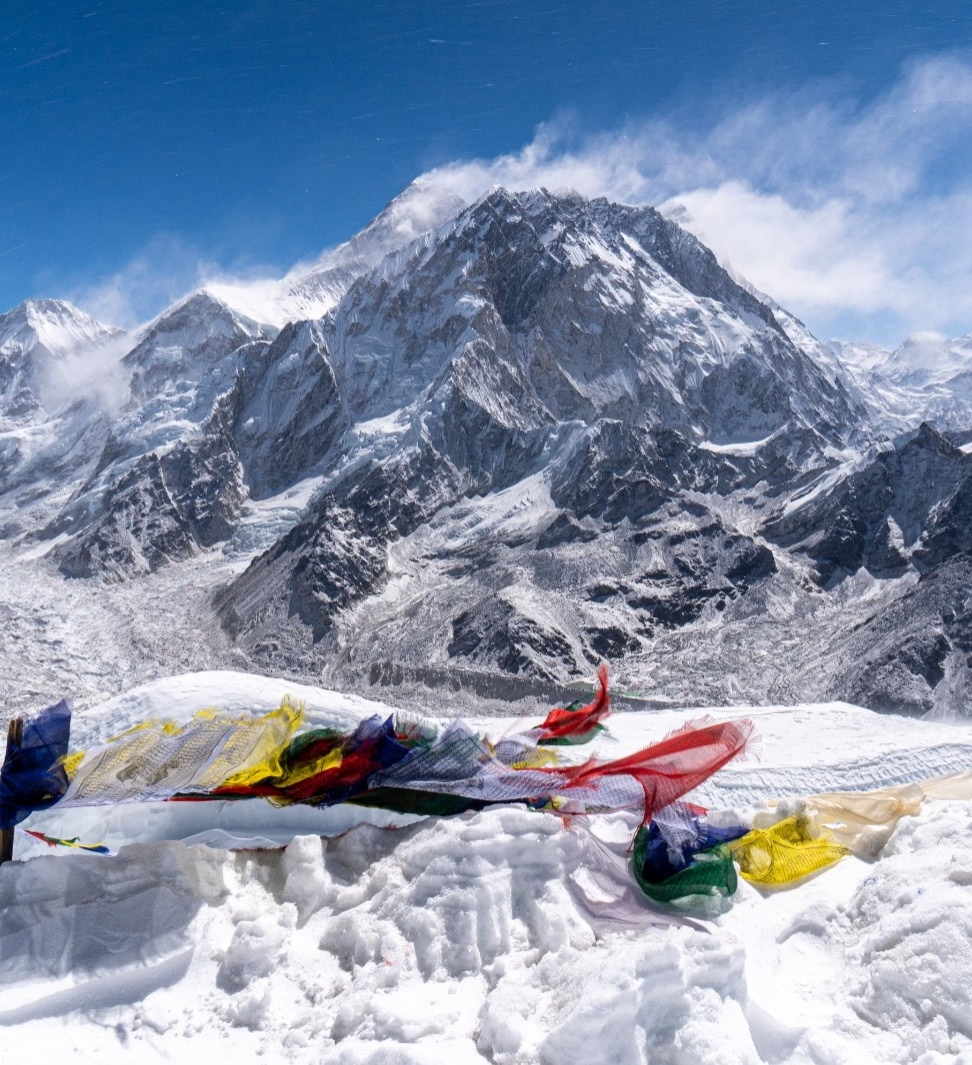
  • Magnificent Khumbu Scenery: Take in vistas of the Himalayan giants, including Everest, Lhotse, Nuptse, Makalu, and Baruntse.

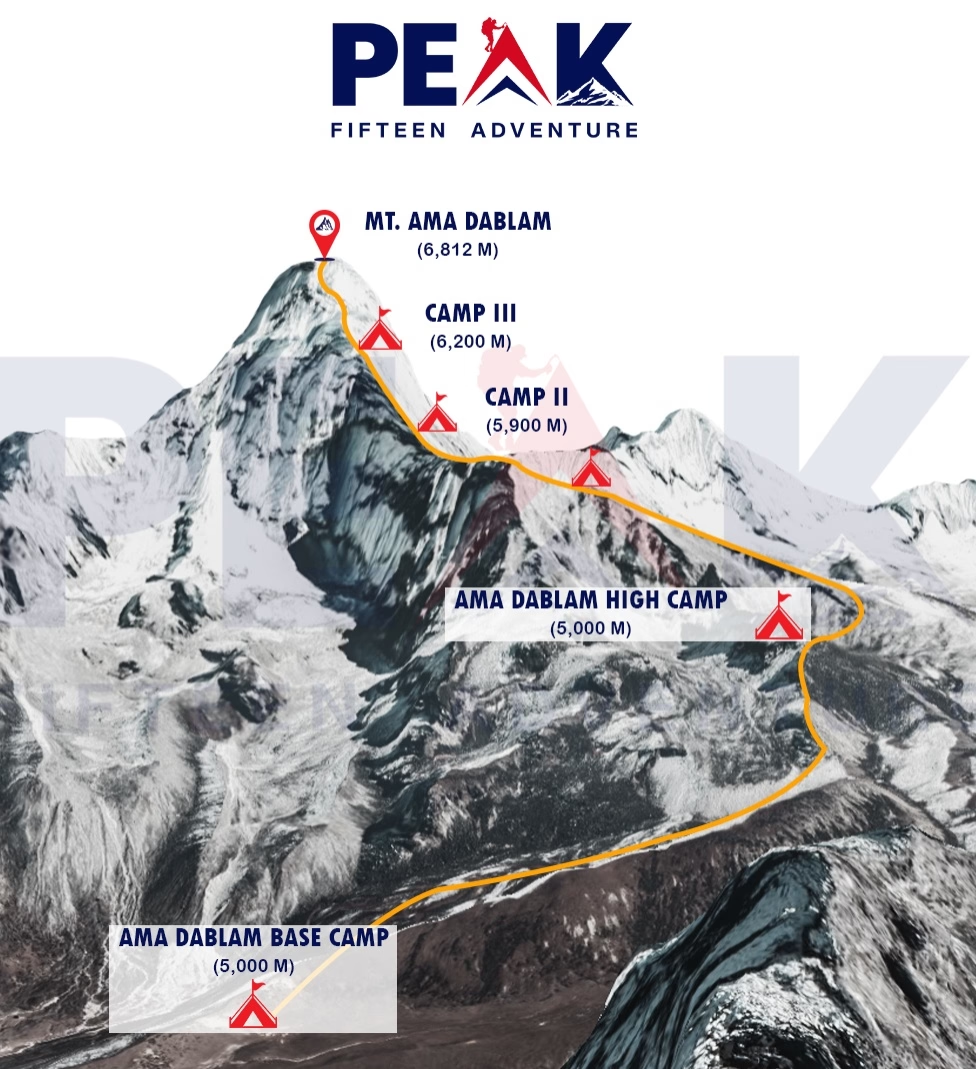
  • Classic Southwest Ridge Route: Climb via Camps I, II, and III on Ama Dablam's well-known route to reach the summit.

  • Sherpa-Led High-Altitude Support: Take advantage of knowledgeable climbing Sherpas, load carrying, route planning, and high-altitude logistics.

  • Everest Region Trek : Trek the Everest Region, passing through Sagarmatha National Park, monasteries, suspension bridges, and fabled Sherpa settlements.

  • Ama Dablam Base Camp: Spend time in the striking base camp beneath the characteristic hanging glacier of the mountain.

  • Progressive Acclimatization: To safely adjust to altitude, use phased rotations between base camp and higher camps.

  • Remote Himalayan adventure: Experience a strenuous journey that combines endurance, technical proficiency, teamwork, and wilderness exploration on a remote Himalayan adventure.

  • Personal Accomplishment: Attain a prominent Himalayan peak that requires prior high-altitude and technical climbing expertise.

Trip overview

Mt.Amadablam

Amadablam peak is known as the “Matterhorn of the Himalayas,” Ama Dablam presents one of the most technical and aesthetic climbs in Nepal. The expedition combines trekking through stunning Himalayan landscapes with a thrilling ascent via the South-West Ridge, offering panoramic views of Everest, Makalu, Cho Oyu, and more. This prestigious expedition demands extensive technical climbing experience on rock, ice, and exposed ridges, making it a great climb prior to attempting a 7,000 or an 8,000-meter peak.

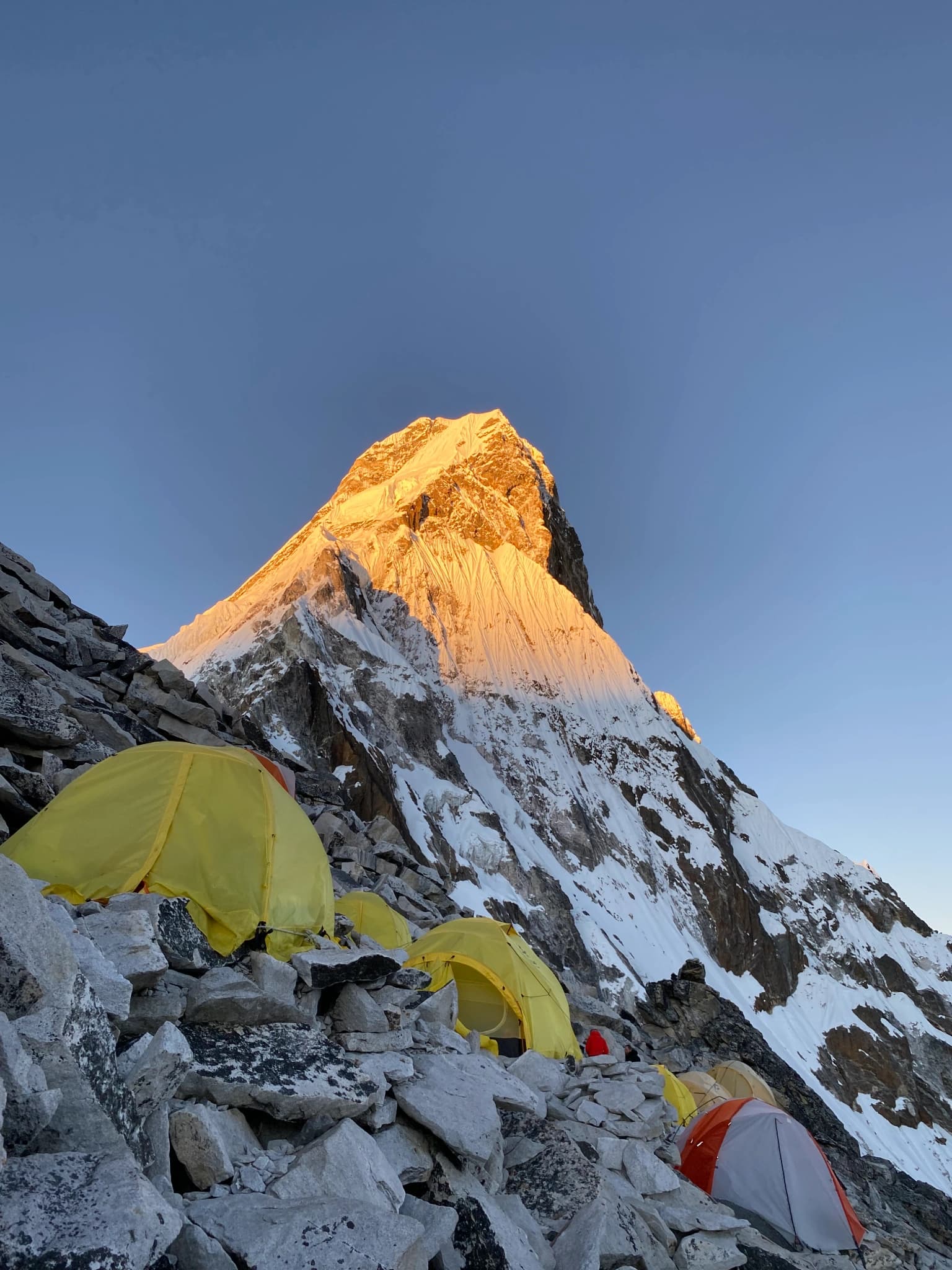
Ama Dablam (6812 m) 2026 autumn is one of the most iconic and beautiful mountains due to its appearance. The mountain possesses long ridges on each side and a hanging glacier at the center, making it resemble a traditional ornament worn by Sherpa women. The ridges are also referred to as the arms of a mother protecting her child and the glacier as an ornament, hence giving the name Ama Dablam, where ‘Ama’; means mother and ‘Dablam’ means the special pendant with the picture of Gods. 

Climbing routes:

The climb follows the regular Southwest Ridge route with three more camps above the base camp. The route from Base Camp to Camp 1 is easy and less demanding but the technicality and difficulty slowly

start rising from Camp 1 to Camp 2 till Camp 3, as climbers need to traverse narrow edges on the ridges with Ice, Rocks, and Snow. The final summit awaits after a steep climb on snow and ice slopes. Despite its difficulty, The peak 15 Adventures’ guide will guide you to the summit perfectly. The route is mesmerizingly picturesque and offers panoramic vistas of the Everest Massif along with Makalu, Cho Oyu, and other peaks in the periphery. 

Training at Basecamp:

Ama dablam Expeditions 2026/27 with Peak fifteen Adventure’s conduct a training at basecamp, which will be conducted by Expert mountain guide. The training like walking on fixed lines, diagonal ascent and descent, traversing, duck walk, classical or flat-footing, handling Oxygen cylinders, using an Ice ax, and Crampons, using walkie talkie and following instructions while climbing will be taught by an expertise.

After the equipment check by guide of peak15 and final preparation done, we shall head towards camp 1 (5700 m) through easy terrain. But the trail gets technical with steep and difficult slopes before a steep ridge and requires tackling a steep slab. 

Before heading for the summit push, we will be acclimatizing by completing the following rotation. We will be heading to Camp I from Base camp and staying overnight at Camp I. The next day we will be heading to Camp II from Camp I & staying overnight at Camp II & return to base camp the next day. Camp 2 is set up at around 5900 m. We will need to climb past steep ridges and snowy slopes with the help of fixed ropes set up by our team. 

The summit climb is an easy one. We wake up early, have our breakfast, and climb up on snowy slopes mixed with rocks above Camp 2. 

We will ascend the peak of marvelous Ama Dablam (6812m) and return back to the Base Camp. The following day will be allocated for cleaning up and preparation to leave. 

Itinerary

  • Day 01

    Arrive in Kathmandu (1,400m) - Expedition Welcome & Hotel Transfer

    Your Ama Dablam Expedition begins in Kathmandu, Nepal’s vibrant Himalayan gateway, at an elevation of approximately 1,400m. Upon arrival at Tribhuvan International Airport, a representative from Peak 15 Adventure will welcome you and assist with your transfer to the hotel. After checking in, take time to rest and recover from your international journey while getting your first feel for the energy of Nepal’s capital.

    The day is intentionally kept relaxed, allowing you to adjust to the local environment and prepare mentally for the expedition ahead. Depending on your arrival time, you may have an opportunity to explore the surrounding streets of Kathmandu or simply rest at the hotel. The expedition team will also ensure that you are informed about the upcoming schedule, preparations and essential arrangements for the days ahead.

    • MealsD
    • AccommodationHotel
    • Travel Duration30-45 min
    • RouteTribhuvan International Airport to Kathmandu
    • TransportationPrivate Vehicle
    • Elevation1400m
  • Day 02

    Gear Checkup, Official Formalities & final gear shopping day (1400m)

    Today is dedicated to making sure nothing is left to chance before heading into the Khumbu. After breakfast, the Peak 15 Adventure expedition team will conduct a detailed gear inspection, checking your personal clothing, technical climbing equipment and essential high-altitude gear to ensure you are properly prepared for the demands of Ama Dablam. Any missing, unsuitable or replaceable equipment can be purchased or arranged in Kathmandu, where a wide range of mountaineering equipment is available.

    The day also covers the necessary official expedition formalities, documentation and briefing. Your expedition leader will discuss the climbing schedule, route strategy, safety procedures, acclimatization plan and the responsibilities of each team member. This is also an opportunity to clarify any final questions before leaving the comfort of Kathmandu behind. Once the paperwork and equipment are finalized, the remainder of the day is yours to rest, organize your expedition bags and mentally prepare for the journey toward Ama Dablam Base Camp.

    • MealsB/L/D
    • AccommodationHotel
    • Travel DurationFull day
    • RouteKathmandu to Kathmandu
    • TransportationPrivate Vehicle
    • Elevation1400m to 1400m
  • Day 03

    Fly from Kathmandu to Lukla (2,860m) & Trek to Phakding (2,610-2,800m)

    The expedition leaves Kathmandu behind today with an exhilarating mountain flight to Lukla, the gateway to the Khumbu and the starting point of the approach toward Ama Dablam. The short flight offers spectacular views of Nepal’s rolling hills and Himalayan landscapes before landing at Tenzing-Hillary Airport in Lukla, situated at around 2,860m.

    After meeting the expedition crew and making final preparations, the trek begins toward Phakding. The trail initially descends through pine and rhododendron-covered landscapes before following the Dudh Koshi River through small Sherpa settlements, mani walls and prayer flags. With approximately 3-4 hours of trekking, this relatively gentle opening walk provides a valuable transition from the city environment to the Himalayan trail while allowing your body to begin adapting to the increased elevation.

    Upon reaching Phakding, settle into the lodge, enjoy a nourishing mountain meal and rest for the journey ahead. Tomorrow, the trail will climb more decisively toward Namche Bazaar, taking you deeper into the heart of the Khumbu.

    • MealsB/L/D
    • AccommodationTeahouse
    • Travel Duration(30-40) min & (3-4) hours
    • RouteKathmandu to Phakding
    • TransportationFlight and Trekking
    • Elevation1400m to (2,610–2,800m)
  • Day 04

    Trek from Phakding to Namche Bazaar (3,440m) - Entering the Heart of the Khumbu

    After breakfast, the trail continues northward from Phakding toward Namche Bazaar, following the rushing waters of the Dudh Koshi River through pine and rhododendron forests. The route passes through traditional Sherpa settlements and crosses several suspension bridges decorated with prayer flags, gradually drawing you deeper into the legendary Khumbu landscape.

    At Monjo, the trail enters Sagarmatha National Park, where permits are checked before continuing toward Jorsalle. Beyond Jorsalle, the landscape becomes more dramatic as the trail crosses the famous high suspension bridge at the confluence of the Dudh Koshi and Bhote Koshi rivers. From here, the route climbs steadily and more steeply through the forest toward Namche. On a clear day, you may catch your first distant glimpses of Everest, Thamserku, Kusum Kanguru and Kongde Ri-a powerful reminder that you are now entering the realm of high Himalayan mountaineering.

    After approximately 5-7 hours of trekking, you arrive at Namche Bazaar (3,440m), the vibrant Sherpa trading center and an important acclimatization stop for expeditions heading deeper into the Khumbu. Take the evening to rest, hydrate and recover, as the following day will be dedicated to acclimatization before continuing toward higher elevations.

    • MealsB/L/D
    • AccommodationTeahouse
    • Travel Duration5-7 hours
    • RoutePhakding to Namche Bazaar
    • TransportationTrekking
    • Elevation(2,610–2,800m) to 3,440m
  • Day 05

    Acclimatization & Rest Day at Namche Bazaar (3,440m) – Everest View Hike & Himalayan Panorama

    Today is dedicated to acclimatization, recovery, and preparation for the higher stages of the Ama Dablam Expedition. Rather than remaining completely inactive, the day follows the proven “climb high, sleep low” approach.

    After breakfast, take a gentle acclimatization hike toward Syangboche and the Everest View Hotel (3,880m). The gradual climb provides valuable exposure to higher altitude while offering spectacular views of Mount Everest, Ama Dablam, Lhotse, Nuptse, Thamserku, and Kongde Ri. The hike generally takes around 3-4 hours round trip, depending on pace and stops.

    Return to Namche Bazaar for lunch and spend the afternoon resting, hydrating, and allowing the body to adapt to the thinner air. The team may also use this time to review the upcoming itinerary, check personal equipment, and discuss altitude-awareness and expedition safety.

    For an Ama Dablam expedition, this day is more than a simple rest stop—it is an important physiological pause before moving deeper into the Khumbu and toward higher elevations.

    • MealsB/L/D
    • AccommodationTeahouse
    • Travel DurationFull day
    • RouteNamche Bazaar to Everest View Hotel
    • TransportationAcclimatization Hike & Rest
    • Elevation3,440m to 3,880m
  • Day 06

    Trek from Namche Bazaar (3,440m) to Dibuche (3,760m) – Through Tengboche and Rhododendron Forests

    After breakfast, the expedition continues from Namche Bazaar toward Dibuche, following the classic Everest trail deeper into the Khumbu. The trail initially contours along the mountainside above the Dudh Koshi Valley, with spectacular views of Everest, Lhotse, Nuptse, Thamserku, and Ama Dablam appearing along the route.

    The trail then descends toward Phungi Thenga, where we cross the Dudh Koshi River before beginning a more sustained uphill section through beautiful rhododendron, pine, and juniper forests. The climb leads to Tengboche (around 3,860-3,870m), home to the renowned Tengboche Monastery and one of the most impressive Himalayan viewpoints in the region.

    After a short break and time to appreciate the monastery and surrounding mountain panorama, we descend through the forest toward the peaceful settlement of Dibuche (3,760m). Compared with the busy atmosphere of Namche, Dibuche offers a quieter Himalayan setting and provides a comfortable overnight stop before continuing toward Pangboche and higher elevations. The journey generally takes around 5-6 hours, covering approximately 9-10 km, depending on the exact route and pace.

    For an Ama Dablam expedition, today's gradual elevation gain is another important step in adapting to the increasing altitude while keeping the pace controlled and sustainable.

    • MealsB/L/D
    • AccommodationTeahouse
    • Travel Duration5-6 hours
    • RouteNamche Bazaar to Dibuche
    • TransportationTrekking
    • Elevation3,440m to 3,760m
  • Day 07

    Trek from Dibuche (3,760m) to Pangboche (3,990m) – Into the Shadow of Ama Dablam

    After breakfast, the expedition resumes from the tranquil forests of Dibuche, following the trail deeper into the Imja Valley toward Pangboche, one of the most historic Sherpa settlements in the Khumbu. The route gradually leaves the dense rhododendron and juniper woodland behind as the landscape opens into alpine terrain.

    The trail crosses the Imja Khola and climbs steadily toward Pangboche, with increasingly impressive views of Ama Dablam, Thamserku, Kangtega, Everest, Lhotse, and Nuptse. As Ama Dablam rises more prominently above the valley, the character of the expedition begins to change-the objective is no longer simply a distant Himalayan silhouette but an increasingly dominant presence on the horizon.

    Upon reaching Pangboche (3,990m), settle into the lodge and allow the body to continue adapting to the rising altitude. If time and conditions permit, there is an opportunity to explore the traditional village and visit Pangboche Monastery, adding a meaningful cultural dimension to the expedition.

    Today is a relatively short trekking stage, allowing the team to conserve energy while steadily gaining elevation before moving toward Ama Dablam Base Camp.

    • MealsB/L/D
    • AccommodationTeahouse
    • Travel Duration3-4 hours
    • RouteDibuche to Pangboche
    • TransportationTrekking
    • Elevation3,760m to 3,990m
  • Day 08

    Trek from Pangboche (3,990m) to Ama Dablam Base Camp (4,450m) – Entering the Expedition Zone

    After breakfast, the expedition leaves Pangboche behind and follows a quieter trail toward the foot of Ama Dablam. The route gradually moves away from the main Everest Base Camp trail, crossing the Imja Khola and continuing through open alpine meadows, juniper vegetation and increasingly rugged terrain.

    As the altitude increases, the landscape becomes more exposed and distinctly alpine. Ama Dablam dominates the horizon, while surrounding peaks such as Kangtega, Thamserku and Taboche create an impressive Himalayan panorama. The approach to Base Camp is also the first point where the scale and technical character of the mountain become truly apparent.

    After approximately 3-4 hours of trekking, the team reaches Ama Dablam Base Camp at 4,450m, where the expedition shifts from lodge-based trekking to mountain-camp life. The camp becomes the operational hub for the climbing period, with time allocated to settling into tents, organizing personal and team equipment, reviewing the climbing plan, and preparing for the technical stages ahead. Current Peak 15 Adventure's itinerary also places Base Camp at 4,450m and moves into preparation and climbing activities from the following day.

    The evening is kept relatively relaxed, allowing the team to recover from the approach and adapt to the increased elevation. With the Southwest Ridge rising above Base Camp, the objective that once appeared distant now stands directly ahead.

    • MealsB/L/D
    • AccommodationTented Camp
    • Travel Duration3-4 hours
    • RoutePangboche to Ama Dablam Base Camp
    • TransportationTrekking
    • Elevation3,990m to 4,450m
  • Day 09

    Leisure & Preparation Day at Ama Dablam Base Camp (4,450m) – Acclimatization, Training & Climbing Readiness

    After breakfast, the team spends a valuable leisure and preparation day at Ama Dablam Base Camp, allowing the body to recover while preparing for the technical climbing stages ahead. With the mountain now directly above camp, the focus shifts from trekking to expedition discipline, technical readiness, and mountain safety.

    The day may include a short walk around Base Camp for active acclimatization, followed by rest and hydration. The climbing team will organize and inspect essential equipment such as crampons, ice axe, harness, ascender, carabiners, climbing ropes, helmet, and high-altitude clothing. Any necessary adjustments to personal gear and expedition loads can be completed before climbing rotations begin.

    The expedition team will also review the Southwest Ridge climbing strategy, rope systems, communication procedures, fixed-line techniques, camp rotations, and emergency protocols. Where appropriate, climbers can refresh essential skills such as ascending and descending fixed ropes, traversing, crampon techniques, ice-axe use, and safe movement on steep snow and ice.

    The remainder of the day is reserved for relaxation, nutrition, hydration, and mental preparation. Every detail matters now-the next phase will take the expedition from Base Camp into increasingly technical and exposed terrain.

    • MealsB/L/D
    • AccommodationTented Camp
    • Travel DurationFull day
    • RouteAma Dablam Base Camp to Ama Dablam Base Camp
    • TransportationLeisure, Acclimatization, Equipment Check & Technical Preparation
    • Elevation4,450m to 4,450m
  • Day 21

    Puja Ceremony at Ama Dablam Base Camp (4,450m) & Begin Climbing Period – Blessings Before the Ascent

    The day begins with one of the most meaningful traditions of a Himalayan expedition-the Puja Ceremony, performed at Ama Dablam Base Camp before the climbing phase officially begins. The ceremony seeks blessings for a safe journey, respects the mountain and local Sherpa traditions, and marks the transition from the approach trek to the serious work of climbing.

    Climbers, Sherpa guides, and expedition staff gather around the beautifully prepared Puja altar, where Buddhist prayers, offerings, incense, and ceremonial rituals are performed. Climbing equipment such as ice axes, crampons, ropes, helmets, and other technical gear may be placed near the altar to receive blessings before being taken onto the mountain.

    Following the ceremony, the team enters the climbing period. Depending on weather, route conditions, acclimatization status, and the expedition leader's assessment, climbers begin their planned rotations between Base Camp and the higher camps. Training and route preparation may include fixed-rope techniques, ascending and descending, traversing, crampon movement, ice-axe handling, and safe movement on technical terrain.

    The climbing period is deliberately flexible. Mountain conditions-not the calendar-ultimately determine when and how each rotation is carried out. The expedition team will monitor weather forecasts, snow and ice conditions, climber health, and route safety before every move higher.

    • MealsB/L/D
    • AccommodationTented camp
    • Travel DurationFull day; Puja Ceremony, technical preparation & climbing activities
    • RouteAma Dablam Base Camp to Ama Dablam Base Camp / Climbing Route
    • Elevation4,450m to 4,450m+
  • Day 26

    Summit Push to Ama Dablam Summit (6,812m) – The Ultimate Ascent

    Today marks the defining moment of the Ama Dablam Expedition-the summit push toward the 6,812m summit. The exact timing and climbing sequence will depend on the expedition rotation, weather window, route conditions, and the expedition leader’s assessment. On standard summit rotations, climbers move through the high camps before making the final ascent, with the upper mountain demanding sustained technical climbing on fixed ropes and exposed snow, rock, and ice terrain.

    The summit attempt begins during the pre-dawn hours, when climbers set out with headlamps into the extreme high-altitude environment. Above the upper camps, the route becomes increasingly exposed and technical, requiring precise crampon work, efficient use of ascenders and fixed ropes, careful movement across steep mixed terrain, and strong teamwork. The final section leads toward the summit ridge and the spectacular summit of Ama Dablam at 6,812m.

    Standing on the summit, climbers are rewarded with an extraordinary Himalayan panorama, including Everest, Lhotse, Makalu, Cho Oyu, Nuptse, and the surrounding Khumbu peaks. Time on the summit is kept controlled because altitude, cold, wind, and changing mountain conditions remain serious considerations.

    After celebrating the achievement and capturing the moment, the team begins the careful descent toward the designated lower camp. The descent is every bit as important as the ascent, particularly on exposed technical terrain. Depending on conditions and the team's strength, the overnight location may be Camp II or another lower camp.

    • MealsBreakfast, packed meals & dinner as arranged
    • Accommodation6,812m
    • Travel Duration10-14 hours
    • RouteUpper Camp / Camp III to Ama Dablam Summit
    • Transportationtechnical climbing, fixed ropes & descent on foot
    • Elevation6,300–6,400m to 6,812m
  • Day 27

    Trek from Ama Dablam Base Camp (4,450m) to Namche Bazaar (3,440m) – Descending Through the Khumbu

    With the summit objective behind you, the expedition begins its descent toward Namche Bazaar. After breakfast, the team leaves Ama Dablam Base Camp and retraces the scenic trail through the Imja Valley, passing the familiar landscapes of Pangboche, Dibuche, and Tengboche before continuing toward Namche.

    The long descent provides a welcome change after the demanding days on the mountain. The trail gradually loses altitude, passing through rhododendron and juniper forests, Sherpa villages, suspension bridges, and sections of the Dudh Koshi Valley. Ama Dablam, Thamserku, Kangtega, Everest, and Lhotse remain impressive companions along portions of the route.

    From Tengboche, the trail continues toward Namche Bazaar, with a final series of climbs and descents before reaching the bustling Sherpa town at 3,440m. Similar Ama Dablam expedition itineraries list this Base Camp-to-Namche journey at approximately 7-8 hours, making it a substantial but rewarding post-summit trekking day.

    Once in Namche, settle into the lodge, enjoy a warm meal, and take time to recover. After the intensity of the summit period, the familiar atmosphere of Namche offers the perfect place to relax and reflect on the expedition so far.

    • MealsB/L/D
    • AccommodationTeahouse
    • Travel Duration7-8 hours
    • RouteAma Dablam Base Camp to Namche Bazaar
    • TransportationTrekking
    • Elevation4,450m to 3,440m
  • Day 28

    Trek from Namche Bazaar (3,440m) to Lukla (2,860m) – The Final Trail Through the Khumbu

    After breakfast, the expedition begins its final trekking day in the Khumbu, descending from Namche Bazaar toward Lukla. The trail retraces the familiar route through the Dudh Koshi Valley, passing through Monjo, Phakding, and several traditional Sherpa settlements along the way. The route gradually loses altitude, making the air feel noticeably warmer and easier to breathe after the demanding days on Ama Dablam.

    The trail winds through pine and rhododendron forests, crosses suspension bridges, and follows the river valley toward Lukla, the gateway through which the expedition first entered the Everest region. The journey covers approximately 18-20 km and generally takes around 7-9 hours, making it one of the longer trekking days of the itinerary.

    Reaching Lukla marks the completion of the trekking portion of the expedition. After checking into the lodge, the team can relax, enjoy a well-earned meal, and celebrate the achievements of the journey with the climbing and support crew. The evening also provides an opportunity to prepare for the upcoming flight back to Kathmandu, subject to weather and flight operations.

    • MealsB/L/D
    • AccommodationTeahouse
    • Travel Duration7-9 hours
    • RouteNamche Bazaar to Lukla
    • TransportationTrekking
    • Elevation3,440m to Lukla
  • Day 29

    Fly from Lukla (2,860m) to Kathmandu (1,400m) & Transfer to Hotel – Returning to the City

    After breakfast, the expedition begins its final journey from the mountains with an early-morning flight from Lukla to Kathmandu. The short Himalayan flight takes approximately 30-35 minutes, offering one last aerial perspective of the rugged valleys and Himalayan landscape before landing at Tribhuvan International Airport.

    Upon arrival in Kathmandu, the Peak 15 Adventure team will receive and transfer you to your hotel by private vehicle. The remainder of the day is kept relaxed, giving you time to rest, recover, freshen up, and reflect on the Ama Dablam summit experience.

    Flight schedules from Lukla are highly dependent on mountain weather and operational conditions. During peak trekking seasons, flights may operate between Lukla and Ramechhap/Manthali, followed by a road transfer to Kathmandu, so the exact routing may vary according to flight operations.

    • MealsB/L/D
    • AccommodationHotel
    • Travel Duration30-50 min
    • RouteLukla to Kathmandu
    • TransportationFlight
    • Elevation2,860m to 1400m
  • Day 30

    Rest & Recovery Day in Kathmandu (1,400m) – Recover, Reflect & Recharge

    Following the demanding ascent of Ama Dablam and the journey back from the Khumbu, today is reserved for complete rest and recovery in Kathmandu. With the major climbing objectives behind you, there is no scheduled trekking or climbing activity.

    Enjoy a relaxed morning at the hotel, allowing your body to recover from the physical demands of the expedition. You may spend the day resting, exploring Kathmandu at your own pace, shopping for souvenirs, or simply reflecting on the experience of standing on Ama Dablam (6,812m).

    The day also provides an opportunity to organize personal belongings, check equipment, and prepare for the final departure. In the evening, the team can gather for a farewell meal and celebrate the successful completion of the expedition with the Peak 15 Adventure crew.

    • MealsB/L/D
    • AccommodationHotel
    • Travel DurationFull day
    • RouteKathmandu
    • TransportationRest & leisure, no scheduled transport
    • Elevation1400m
  • Day 31

    International Departure from Kathmandu (1,400m) – Farewell to Nepal

    After breakfast, enjoy your final moments in Kathmandu before preparing for your international departure. Depending on your flight schedule, you may have some free time to relax, organize your luggage, and complete any last-minute arrangements.

    At the scheduled time, the Peak 15 Adventure team will transfer you to Tribhuvan International Airport for your onward flight. As the journey comes to an end, the memories of Ama Dablam-its towering ridges, demanding climbs, and unforgettable summit-travel home with you.

    We bid you farewell with gratitude and hope to welcome you again for another Himalayan adventure.

    • MealsB
    • Travel Duration30-40 min
    • RouteKathmandu to Tribhuvan International Airport / Home Country
    • TransportationPrivate Vehicle
    • Elevation1400m
Altitude profileMax 6,812 m
1,400 mD11,400 mD22,610 mD33,440 mD43,880 mD53,760 mD63,990 mD74,450 mD84,450 mD94,450 mD216,812 mD263,440 mD273,440 mD281,400 mD291,400 mD301,400 mD31

Are you looking to customize the trip itinerary?

If the provided schedule is not suitable for you, we can create a personalized travel arrangement tailored to your preferences and requirements.

Customize Trip

Cost breakdown

What's included
  • Pick up and drop off services for both international & domestic flights as per the itinerary

  • 3 nights 3 star category Hotel in Kathmandu on bed & breakfast plan, 2 nights before and 1 nights after the expedition

  • Welcome dinner at Nepalese fine dine restaurant

  • Early morning drive from Kathmandu to Ramechap by private vehicle with guides

  • Both-ways domestic flight from Ramechaap – Lukla – Ramechhap with guide

  • 01 Trekking guide to the basecamp with necessary porters.

  • All necessary transportation for overall expeditions

  • Mt. Amadablam (6,812m) climbing permit, All necessary Permits, National Park and VDC fees

  • Summit route fixing charge

  • Garbage disposal and management fees

  • 3 Meals a day (BLD) during the trek with attached Bathroom at Phakding, Namche and onwards

  • Freshly cooked meals (Breakfast, Lunch & Dinner): Continental, Nepali, Indian and Chinese with hot drinks, Tea and Coffee

  • Training at Basecamp: Training at basecamp will be conducted by IFMGA. The training like walking on fixed lines, diagonal ascent and descent, traversing, duck walk, classical or flat-footing, handling Oxygen cylinders, using an Ice ax, and Crampons, using walkie talkie and following instructions while climbing will be taught by an expertise.

  • 01 Professional Climbing Sherpa for both mountains with his equipment allowance, daily wages and carrying bonus (01 Member: 01 Climbing Sherpa)

  • Government Liaison officer with his daily wages, equipment, food, insurance and transportation

  • Base Camp Sardar, Cook and Kitchen helpers with their equipment allowance and daily wages

  • 45 kg as a member personal baggage

  • Each Member will be provided with individual Tent, Mattress and Pillow

  • Common Equipment: Dining Tent, Kitchen Tent, Shower Tent, Toilet Tent, Tables and Chairs, Heater etc.

  • High Camp Services for C1-C2: High Tent, Shovel, Rope, EPI Gas, Gas Burner (MSR Rector), High Food like soup items, tea/coffee etc.

  • Walkie-talkie for communicating from Base Camp to Mountain and Mountain to Base Camp

  • Internet access Wi-Fi is available to all climbers on our team at Base Camp (Subject to charge @ $50/gigabyte)

  • Satellite phone is available for emergency use @ $3 per minute

  • Weather forecast during the entire expedition

  • In case of emergencies, sufficient Oxygen and Mask regulator available at our Base camp (chargeable as per use)

  • Helicopter rescue insurance for involved outdoor Nepali staffs only

  • Complementary Peak15 Adventure Duffel Bags and Caps (if required)

  • First Aid medical kit carried by guide and store at basecamp

  • Mt. Amadablam summit certificates from MOCCA after the successful summit of the Peak. (Required summit photos or short videos of summit for proof.)

  • Government Taxes and Company Service Charge

What's not included
  • International flight tickets from/to your country

  • Nepal Entry visa fee that can be obtained at the airport upon arrival

  • An extended stay in the hotel after 4-nights in Kathmandu

  • Your Personal Climbing Equipment Expenses, personal nature expenses such as hard and soft drinks, laundry, postage, telephone, Wi-Fi, etc.

  • Extra cost incurred due to Personal member’s baggage exceeding 45kilograms

  • Costs from delays due to weather or itinerary changes

  • Insurance such as travel, accident, medical, and emergency evacuation by helicopter in case of need during an Expedition

  • Summit Bonus: US$ 800 per Climbing Sherpa and some tips to Basecamp staffs around US$ 250/- for Basecamp team. Tips to trekking guide and porter about US$ 200 in total

  • Any other extra expenses other than those mentioned in the Cost Includes section

Upcoming departures

Filter departures by month
Oct 10 – Nov 9, 2026
Available
$8,500

All prices per person, twin share. Subject to availability — Amadablam (6,812m) Expedition dates fill quickly in peak season.

Useful information

Ama Dablam (6,812 m) is a striking, sharply ridged peak in Nepal’s Khumbu region, famed for its elegant, steep profile and technical climbing. The standard route is the Southwest Ridge, a sustained mix Before setting your sights on Ama Dablam (6,812m), preparation is as important as ambition. This is a serious Himalayan expedition involving high altitude, technical climbing, rapidly changing mountain weather and demanding terrain. Understanding the mountain, preparing the right equipment and arriving with the right physical and mental mindset can make the difference between simply attempting the summit and giving yourself the strongest possible chance of standing on it. Here are the key things to know before your expedition begins:

Altitude & Acclimatization

  • The expedition reaches 6,812m, where altitude and reduced oxygen become major challenges.

  • A carefully planned acclimatization schedule is essential before attempting the summit.

  • Climbers should ascend gradually, allowing the body sufficient time to adapt to increasing elevation.

  • Proper hydration, nutrition, rest and a sustainable climbing pace are essential throughout the expedition.

  • Inform your expedition leader immediately if you experience symptoms such as persistent headache, dizziness, nausea, unusual fatigue or difficulty breathing.

  • Acclimatization rotations between Base Camp and higher camps may be necessary to prepare the body for the summit push.

Technical Climbing & Experience

  • Ama Dablam is a technical mountaineering expedition, not a conventional trekking peak.

  • The Southwest Ridge involves steep sections of rock, snow and ice, exposed terrain and climbing with fixed ropes.

  • Climbers should be comfortable using essential mountaineering equipment such as crampons, ice axe, harness, ascender and descender.

  • Previous experience with high-altitude climbing and technical rope systems is strongly recommended.

  • Physical strength alone is not enough; balance, rope-management skills, judgment and confidence in exposed terrain are equally important.

  • Follow the instructions of your expedition leader and climbing Sherpa team carefully, particularly on technical sections and during summit operations.

Packing & Expedition Equipment

  • Bring properly fitted mountaineering boots suitable for extreme high-altitude conditions.

  • Essential equipment includes crampons, ice axe, climbing harness, helmet, ascender, descender, carabiners and appropriate climbing ropes/accessories as required by the expedition.

  • Pack a layered clothing system including thermal base layers, insulating layers, a waterproof shell, down jacket, gloves and warm headwear.

  • High-quality mountaineering goggles and sunglasses are essential for protection from intense sunlight and snow glare.

  • Carry a reliable headlamp with spare batteries for early-morning summit starts.

  • A suitable sleeping bag, personal first-aid supplies, sunscreen, lip balm and personal medications should be included.

  • Your expedition team will provide guidance on the exact equipment required and any items available for rental in Nepal.

Weather & Mountain Conditions

  • Weather on Ama Dablam can change rapidly, particularly at higher elevations.

  • Strong winds, snowfall, freezing temperatures, cloud and sudden changes in visibility can affect climbing conditions.

  • The summit window depends heavily on stable weather and suitable route conditions.

  • Even during the preferred climbing seasons, mountain conditions cannot be guaranteed.

  • Summit attempts may need to be delayed, adjusted or abandoned when conditions become unsafe.

  • Flexibility is essential; on a high-altitude expedition, the mountain ultimately decides the timetable.

Physical Fitness & Mental Preparation

  • Ama Dablam demands a high level of physical fitness, endurance and technical climbing ability.

  • Climbers should prepare well in advance with cardiovascular training, strength conditioning, endurance exercises and regular hiking or mountaineering practice.

  • Training with a loaded backpack and practicing movement on steep or uneven terrain can be particularly beneficial.

  • The expedition involves long days, limited oxygen, cold temperatures and physically demanding climbing.

  • Mental resilience is equally important when facing fatigue, exposure, changing weather and unexpected challenges.

  • Arrive prepared to be patient, disciplined and adaptable rather than focused solely on reaching the summit.

Expedition Camps & Facilities

  • The expedition establishes a series of high-altitude camps between Base Camp and the summit, according to route conditions and the operational plan.

  • Facilities become progressively more basic as you climb higher.

  • Base Camp generally serves as the primary acclimatization and logistics hub, while higher camps provide essential staging points for the summit attempt.

  • Electricity, communication, charging facilities and other comforts become increasingly limited at higher elevations.

  • Climbers should be prepared for cold nights, basic facilities and limited personal space during higher-altitude rotations.

Food, Nutrition & Hydration

  • Maintaining sufficient nutrition is vital during a high-altitude expedition.

  • Meals are designed to provide the carbohydrates, protein and calories required for demanding climbing days.

  • Eat regularly even when appetite decreases at altitude.

  • Drink sufficient safe water throughout the day to reduce the risk of dehydration.

  • Hydration becomes particularly important during acclimatization rotations and summit preparation.

  • Carry suitable personal snacks such as energy bars, dried fruits, chocolate or other lightweight high-energy foods for climbing days.

Permits & Documentation

  • Climbers must obtain the required Ama Dablam climbing permit and relevant Nepal expedition documentation.

  • A valid passport, appropriate travel insurance and emergency contact details should be kept accessible.

  • High-altitude mountaineering insurance with suitable emergency evacuation coverage is strongly recommended.

  • Peak 15 Adventure will coordinate the required expedition permits, logistics and official arrangements as part of the organized expedition.

  • Climbers should ensure that their personal documentation and insurance remain valid for the entire duration of their stay in Nepal.

Communication & Emergency Preparedness

  • Communication facilities can become limited as the expedition moves farther above Base Camp.

  • Satellite communication or other expedition communication systems may be used where appropriate.

  • Your expedition team will maintain communication and monitor conditions throughout the climbing period.

  • Emergency procedures and evacuation plans should be understood before entering the higher mountain environment.

  • Never continue climbing simply because you have invested time or effort; safety decisions always take priority over summit ambitions.

Responsible Mountaineering

  • Ama Dablam lies within the sensitive Himalayan environment of the Khumbu region.

  • Respect local communities, cultural traditions, monasteries, prayer flags and sacred sites encountered along the approach.

  • Minimize waste and avoid unnecessary single-use plastics wherever possible.

  • Follow established routes and expedition protocols to help protect the fragile mountain environment.

  • Respect other climbing teams and avoid unnecessary crowding or interference on technical sections.

  • Leave the mountain with the same respect with which you entered it.

Travel With the Right Mindset

  • An Ama Dablam expedition is not measured only by reaching 6,812m; it is a journey of preparation, patience, teamwork and responsible decision-making.

  • Be prepared for long days, cold conditions, basic facilities, technical climbing and changes to the planned schedule.

  • Understand that reaching the summit is never guaranteed, regardless of fitness or experience.

  • Listen to your body, trust your climbing team and respect the mountain when conditions demand a change of plan.

  • Come prepared to climb with discipline, adapt with humility and experience the Himalayas with respect.

At Peak 15 Adventure, preparation is part of the expedition. We plan carefully, climb responsibly and place safety at the heart of every decision-from the first step toward Base Camp to the final summit attempt. Because on Ama Dablam, the goal is not simply to climb higher; it is to climb smarter.of rock, snow and ice requiring strong alpine skills, rope work, and glacier travel; climbs typically take 3–4 weeks including acclimatization.

Best seasons are pre‑monsoon (Apr–May) and post‑monsoon (Sep–Oct). Permits and a licensed operator/guide are required.

prior experience on 6k technical peaks, excellent fitness, and familiarity with fixed ropes, ice tools, and crevasse rescue are recommended. Hazards include seracs, avalanches, steep rock/ice sections, and altitude—attempt only with experienced guides, proper acclimatization, and evacuation insurance.

Trip map

Amadablam Climbing route map

You may also like

Classic itineraries with hundreds of happy travellers under their belts.

From$8,500
Book Now
Achieve Your Dream
Mountain Ridge Divider
Peak 15 Expedition 1
Peak 15 Expedition 2
Peak 15 Expedition 3
Peak 15 Expedition 4
Peak 15 Expedition 5